Studio Stories
What Happens in a Small-Group Art Class at Pony Palette
A closer look at how structured guidance, individual attention and creative practice come together in a small-group art class.
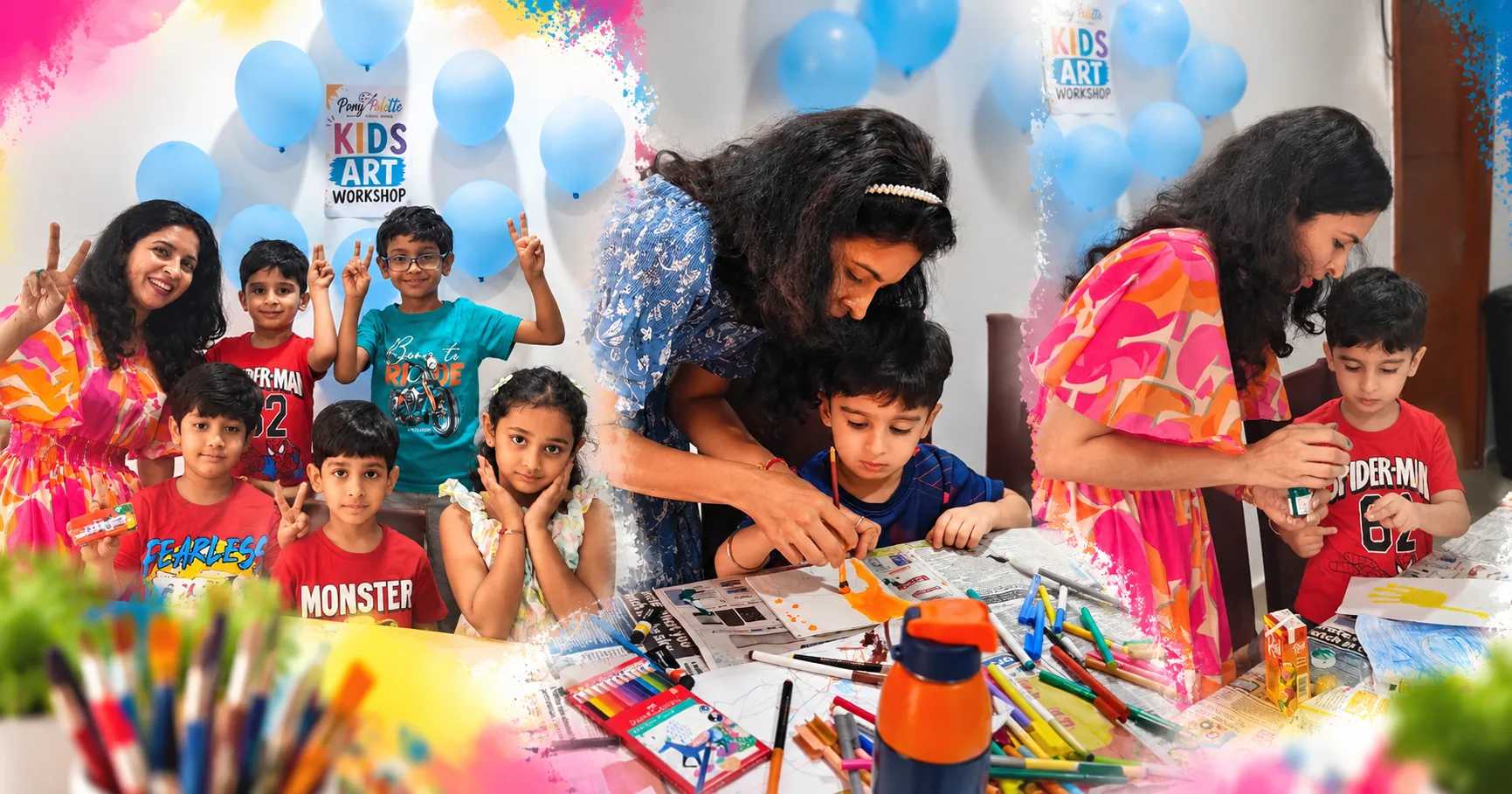
A small-group art class can feel very different from a large classroom or a one-size-fits-all activity session.
At Pony Palette, the aim is not simply to help children finish a picture. The focus is on helping them understand what they are doing, practise techniques step by step and gradually become more confident in their own creative decisions.
Because the group is small, the teacher has more opportunity to observe each learner, answer questions and adjust guidance according to the child's age, experience and current skill level.
So what actually happens during a small-group art class at Pony Palette?
The Class Usually Begins with Observation
Before children begin drawing or painting, they are often encouraged to look carefully at the subject, reference or idea they will be working with.
They may be asked to notice simple shapes, compare sizes, observe proportions, identify colours or look at where light and shadow appear.
This first stage helps children slow down and understand that drawing is not only about moving a pencil across paper. It begins with learning how to see.
The Teacher Explains the Technique in Steps
Rather than presenting a finished artwork and asking everyone to copy it, the process is broken into manageable stages.
For example, a drawing lesson may begin with basic forms before moving to proportion, contour and detail. A painting activity may start with colour selection, brush handling or background work before smaller elements are added.
Breaking a task into stages makes the learning process easier to understand and gives children a method they can use again in future work.
Children Work at Their Own Pace
Even when children are working on the same activity, they do not all progress in exactly the same way.
One child may quickly understand the basic shape but need help with proportion. Another may be comfortable drawing but unsure about colour mixing. Someone else may simply need more time to observe before starting.
A small-group setting makes it easier to allow for these differences without making children feel rushed or left behind.
Individual Feedback Happens During the Process
One of the main advantages of a small-group art class is that feedback can happen while the child is working, not only after the artwork is finished.
The teacher can notice whether a line is too heavy, whether a shape needs adjusting, whether proportions are changing or whether a child has found an interesting creative solution.
Feedback is most useful when it helps the learner understand what to look at next rather than simply correcting the work for them.
This allows the child to remain responsible for the artwork while still receiving meaningful guidance.
Technique and Creativity Are Both Encouraged
Learning technique does not mean every child's artwork should look identical.
Children may learn the same drawing, painting or colour principles, but they can still make different choices about composition, colour, detail or interpretation.
At Pony Palette, the intention is to help children build technical foundations while also giving them space to develop their own visual ideas.
That balance is important because confidence grows when a child understands both how to use a technique and how to make choices independently.
Questions Are Part of the Learning
In a small class, children have more opportunity to ask questions without feeling that they are interrupting a large group.
They may ask how to mix a certain colour, how to make an object look three-dimensional, which brush to use or why one part of a drawing appears out of proportion.
These questions are useful because they show that the child is thinking about the process rather than simply following instructions.
Mistakes Are Treated as Part of Practice
Art rarely develops perfectly on the first attempt.
Children may draw a line they do not like, mix an unexpected colour or realise that part of a composition needs changing.
Instead of treating every mistake as something that must immediately be erased, the teacher can help the child understand what happened and what could be adjusted.
This approach encourages patience and helps children become more comfortable experimenting.
Different Materials Keep Learning Varied
Depending on the lesson and learning level, children may work with pencil, colour pencils, crayons, watercolour, acrylics, mixed media or other suitable materials.
The material is not the main goal by itself. It is chosen to support the technique or idea being explored.
For example, pencil may be used to practise proportion and shading, while paint may be introduced to explore colour relationships, brush control and layering.
The Class Ends with Reflection, Not Just Completion
Finishing the artwork is only one part of the class.
Children can also benefit from looking at what they created and thinking about what worked, what felt difficult and what they might try differently next time.
This reflection helps turn each class into part of a longer learning process rather than an isolated activity.
Why Small-Group Learning Matters
Small-group learning makes it easier to combine structure with individual attention.
Children can learn alongside others, see different approaches and enjoy the social side of a class while still receiving guidance that is relevant to their own work.
For parents looking for small-group art classes in Hyderabad, this can be especially valuable because the quality of feedback often matters as much as the activity itself.
What Children Can Gradually Develop
Over time, consistent art practice can help children strengthen several connected skills.
- careful observation
- drawing and painting technique
- hand control and coordination
- colour awareness
- patience and concentration
- creative decision-making
- confidence in expressing ideas
Progress does not look exactly the same for every child, and that is one reason individual guidance matters.
A Typical Pony Palette Class Is About the Process
The finished artwork is enjoyable to take home, but the more important part of the class is what the child learns while creating it.
At Pony Palette, small-group art classes are designed to give children structured guidance in drawing, painting, colour and creative techniques while allowing them to develop at a comfortable pace.
The goal is to help each learner understand the process, practise consistently and gradually become more confident in both technique and personal expression.
Continue exploring
Related articles
Kids Art
How Art Classes Help Children Build Observation and Patience
Discover how structured art learning can help children observe more carefully, practise patience, think creatively and build confidence through guided artistic practice.
4 min read
Kids Art
How to Choose an Art Class for Kids in Hyderabad
Learn what to look for when choosing an art class for children in Hyderabad, from teaching approach and class size to technique and creative guidance.
5 min read