
Kids Art
How to Choose an Art Class for Kids in Hyderabad
A practical guide for parents looking for the right balance of technique, creativity, individual attention and enjoyable learning.
Choosing an art class for your child may look simple at first. Search for nearby classes, compare timings, check the fee and enrol.
But the quality of an art class depends on much more than convenience.
A good children's art class should help a child understand how to observe, draw, use colour, work with different materials and express ideas with increasing confidence. The learning environment, teaching approach and amount of individual attention can make a significant difference.
If you are looking for an art class for kids in Hyderabad, here are some important things to consider before making a decision.
Look Beyond Finished Artwork
Parents naturally notice the artwork displayed by a studio, but beautiful finished pieces do not always tell you how children are being taught.
Ask how students arrive at those results.
Are children shown a completed picture and expected to reproduce it exactly? Or does the teacher explain shapes, proportion, colour, composition and technique along the way?
Copying can occasionally be useful as an exercise, but a strong art programme should gradually help children understand why something works rather than simply imitate it.
The goal should be learning, not just producing something attractive at the end of every class.
Consider the Teaching Approach
Different children learn differently.
Some respond quickly to demonstrations. Others need time to observe, ask questions and try a technique several times.
A useful art class should therefore combine structured teaching with enough flexibility for children to work at their own pace.
For example, while learning to draw an object, children may first be encouraged to notice its overall shape, compare proportions and identify simple forms before adding details.
This kind of step-by-step learning builds understanding that children can later apply to new subjects.
Check the Class Size
Class size matters, especially for younger learners.
In a very large group, it can be difficult for an instructor to notice when one child is struggling with proportion, another is holding a tool incorrectly, and someone else has understood the task but needs a new challenge.
A small-group art class gives the teacher more opportunity to observe individual progress and provide relevant guidance.
It also makes it easier for children to ask questions without feeling lost in a large group.
Make Sure the Class Is Suitable for Your Child's Age and Level
A five-year-old beginning to explore colour and shapes has different needs from an older child who wants to improve drawing accuracy or painting technique.
Ask how the class is organised by age, skill or learning stage.
A suitable programme should neither overwhelm beginners nor keep more experienced students repeating work that is too easy.
The best classes provide enough structure to develop foundations while allowing children to progress gradually.
Look for Both Technique and Creative Freedom
Technique and creativity should not compete with each other.
Children benefit from learning practical skills such as:
- observing shapes and proportions
- controlling pencils and brushes
- understanding light and shade
- mixing colours
- planning composition
- working with different surfaces and materials
At the same time, they should have opportunities to make decisions of their own.
Choosing colours, interpreting a subject differently or developing an original idea helps children begin using technique as a tool for personal expression.
Ask How Mistakes Are Handled
Art involves experimentation, and children will inevitably make marks they do not like or create something different from what they intended.
A supportive teacher should help children understand what can be adjusted and what can be learned from the attempt.
Constant correction can make young learners overly cautious. No guidance at all can leave them repeating the same difficulties.
The right balance is constructive feedback that helps the child improve without taking ownership of the artwork away from them.
See Whether Children Are Actually Engaged
A good art class does not need to feel like school.
Children can learn serious skills while still enjoying the process.
When visiting or enquiring about a studio, notice whether the environment feels welcoming and whether children appear comfortable asking questions and experimenting.
Engagement matters because meaningful progress usually comes from consistent practice. Children are more likely to continue practising when they enjoy the experience of learning.
Ask About Materials and Variety
Children can learn a great deal by experiencing different media.
Depending on the programme, this might include pencil, charcoal, crayons, watercolour, acrylics, mixed media or fabric painting.
Variety should have a purpose, however. Simply moving from one craft activity to another is different from developing artistic skills.
Ask whether projects are connected to techniques the child is learning.
Choose a Class That Values Progress, Not Comparison
Children develop artistic skills at different speeds.
One child may understand colour quickly but need more time with drawing. Another may be very imaginative while still developing fine control.
A healthy learning environment should focus on each child's progress rather than constantly comparing students with one another.
Parents can also support this by asking questions such as, “What did you learn today?” instead of only asking, “Is your picture finished?”
Location and Schedule Still Matter
Teaching quality should come first, but practical factors matter too.
A class that requires a stressful journey or repeatedly clashes with the child's routine may be difficult to continue consistently.
When comparing art classes for kids in Hyderabad, consider travel time, class schedule, session duration and whether the programme can realistically become part of your child's routine.
Regular attendance is often more valuable than choosing an impressive programme that becomes difficult to sustain.
The Right Art Class Should Help a Child Grow
There is no single perfect art class for every child.
The right choice is usually a place where your child receives thoughtful instruction, enough individual attention and the freedom to explore ideas while building real artistic skills.
Look for a programme that helps children become more observant, patient, confident and independent in the way they approach creative work.
At Pony Palette, our approach to kids art classes in Hyderabad combines small-group guidance with structured learning in drawing, painting, colour and creative techniques.
Children are encouraged to understand the process behind their artwork while gradually developing their own ideas and creative confidence.
Continue exploring
Related articles
Studio Stories
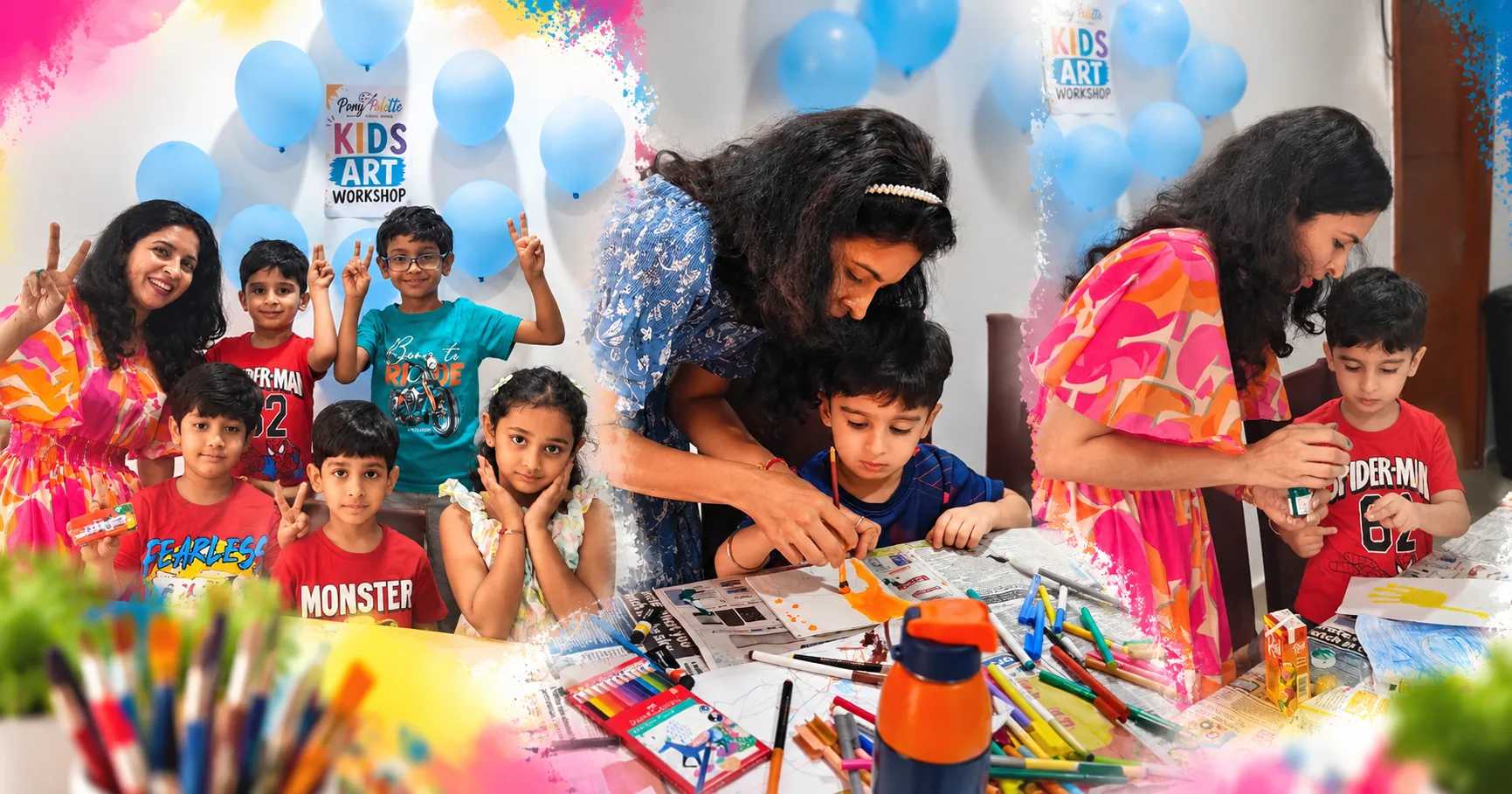
What Happens in a Small-Group Art Class at Pony Palette
See what happens inside a small-group art class at Pony Palette, from observation and technique to individual feedback, creative choices and steady skill development.
5 min read
Kids Art
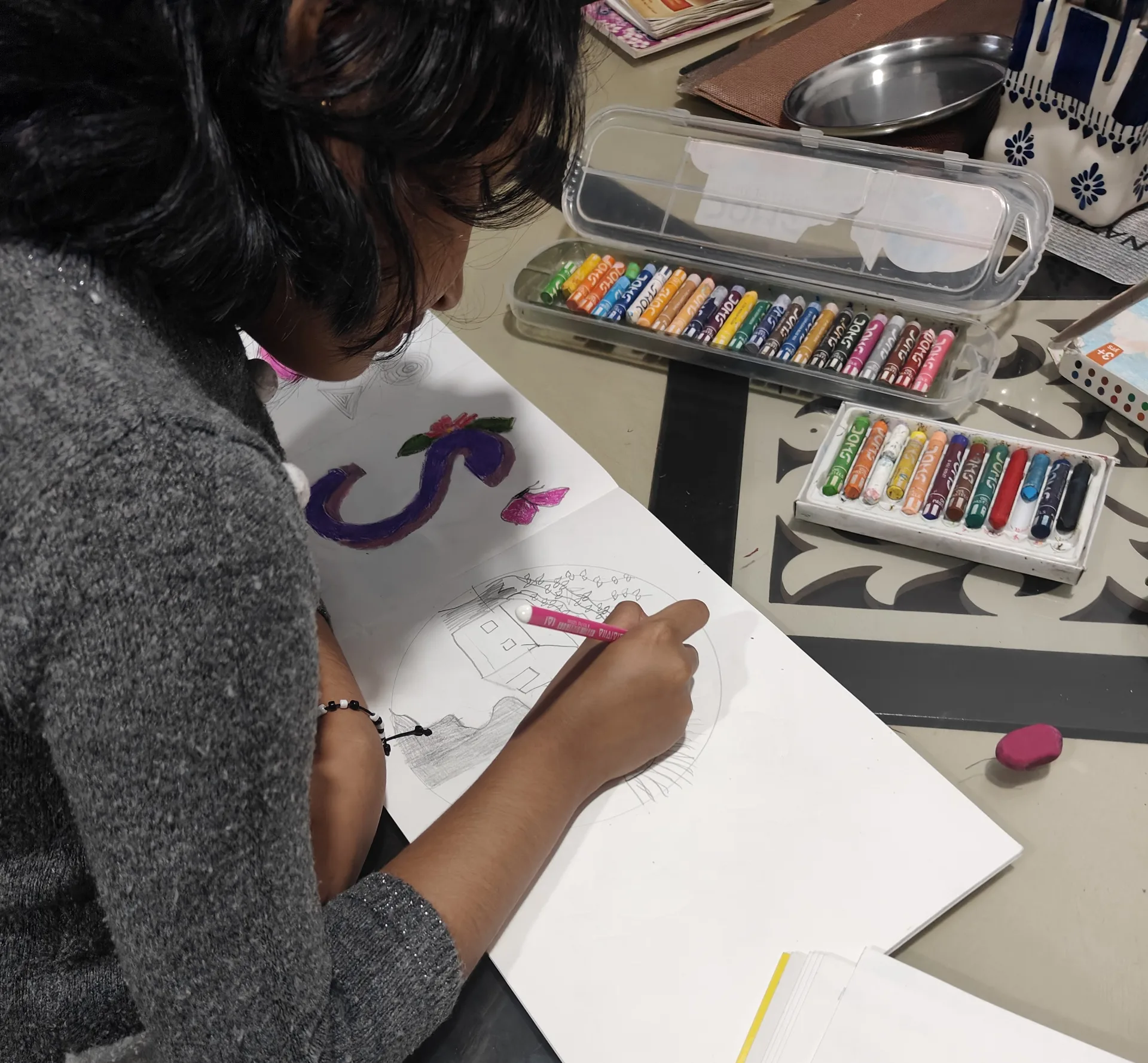
How Art Classes Help Children Build Observation and Patience
Discover how structured art learning can help children observe more carefully, practise patience, think creatively and build confidence through guided artistic practice.
4 min read