
Kids Art
How Art Classes Help Children Build Observation and Patience
How creative practice can help children slow down, notice more and develop confidence through the process of making art.
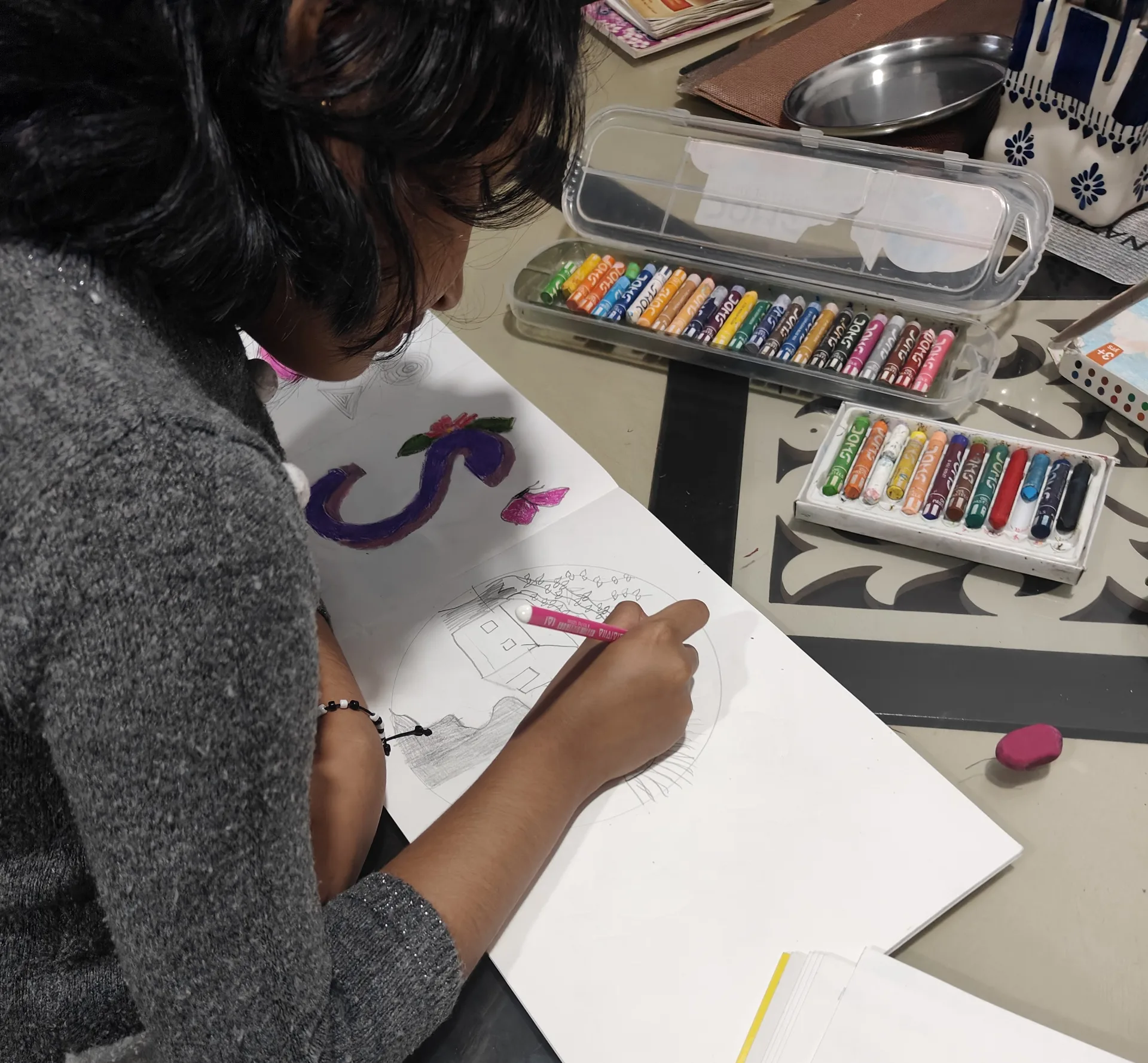
Art gives children something that many fast-moving activities do not: a reason to slow down and really look.
When a child tries to draw a leaf, mix a colour, study the shape of a cup or decide where an object should sit on the page, they are doing more than making a picture. They are learning to notice details, make choices, try again and stay with an idea long enough to develop it.
These habits can support two qualities that are useful far beyond the art table: observation and patience.
Art Encourages Children to Look More Carefully
Children often recognise an object instantly without studying it closely. A flower is simply “a flower,” and a chair is “a chair.”
Drawing changes that.
To draw something, a child begins asking different questions:
- Is it tall or wide?
- Which shape is bigger?
- Where does this line curve?
- Which side is darker?
- What colour do I actually see?
- How are the parts connected?
This kind of careful looking helps children move from simply recognising an object to observing it.
Over time, they may begin noticing differences in shape, proportion, colour, texture and light that they previously overlooked.
Drawing Teaches Children to Work Step by Step
A finished artwork rarely appears in one movement.
A drawing may begin with simple shapes. A painting may require a background before the smaller details. Fabric art may need a design to be planned before colour is applied.
Children gradually discover that some things cannot be rushed.
They learn to complete one stage, look at the result, make an adjustment and then continue.
This process can make patience feel practical rather than abstract.
Instead of being told to “be patient,” the child experiences why patience matters.
Mistakes Become Part of Learning
Young learners can sometimes become frustrated when their drawing does not immediately match what they imagined.
Art provides a safe way to understand that the first attempt does not have to be perfect.
A line can be adjusted.
A shape can be redrawn.
A colour choice can lead to a different idea.
A teacher can point out a proportion that needs attention, and the child can try again.
When this happens regularly, mistakes begin to feel less like failure and more like information about what to do next.
That change in attitude can make children more willing to experiment and persist.
Art Can Strengthen Creative Decision-Making
Observation does not mean that every child must create realistic artwork.
Once children learn to look carefully, they can also decide what they want to change.
They may exaggerate a shape, choose unexpected colours or create a completely imaginative version of something they have observed.
Art combines careful looking with personal choice.
That balance helps children understand that technique and creativity can work together.
Small-Group Guidance Can Make a Difference
Children do not always need the same correction at the same moment.
One child may need help understanding proportion. Another may be learning how much pressure to use with a pencil. Someone else may need encouragement to continue instead of starting over.
In a small-group art class, a teacher has more opportunity to notice these individual needs and offer specific feedback.
At Pony Palette, the focus is on guided learning rather than simply asking children to copy a finished picture. The aim is to help each learner understand the process behind the work.
What Parents Can Encourage at Home
Parents do not need to become art teachers to support a child's creative development.
Simple habits can help:
- Give children time to finish without rushing them.
- Ask what they noticed while drawing.
- Ask which part they found difficult.
- Encourage them to compare an object with their drawing.
- Praise thoughtful effort, not only the finished result.
- Keep some drawings so children can see their own progress over time.
Questions such as “What did you notice?” or “What would you change next time?” can encourage reflection without judging the artwork.
Learning to Slow Down and See More
Art classes are not simply about producing attractive pictures.
They can give children repeated opportunities to observe carefully, make decisions, solve small problems, practise techniques and continue working when something takes time.
A child who learns to look closely at a shape, patiently develop a drawing and make thoughtful corrections is learning something valuable about the creative process.
And perhaps the most important lesson is simple:
Good work does not always need to happen quickly.
Sometimes progress begins by slowing down, looking again and giving an idea time to grow.
Explore Kids Art Classes at Pony Palette
Pony Palette offers small-group art classes for kids in Hyderabad, with structured guidance in drawing, colour, painting and creative techniques.
Children are encouraged to build strong foundations while developing confidence in their own ideas and creative decisions.